


Personal Loan 2026 - Lowest Rates, Compare Banks & Apply Online
What is a Personal Loan?
A personal loan is an unsecured loan from a bank or NBFC that you can use for any financial need, with no collateral required. BankBazaar features personal loans of up to Rs.1 crore at interest rates starting from 8.90% p.a., with repayment tenures of up to 7 years. Compare offers below to find the personal loan that best fits your budget.
Personal Loan
A Personal loan is a type of unsecured loan that you can borrow from a bank or financial institution if you require funds to pay for your financial needs.
Interest Rate | 8.90% p.a. onwards |
Loan Amount | Up to Rs.1 crore |
Loan Tenure | Up to 7 years |
Processing Fee | 0% - 6% of the loan amount + GST |
Note: Interest rates updated on 24 August 2026.
Personal Loan Interest Rate
The personal loan interest rates varies between 8.75% p.a. and 28% p.a. Depending on the loan amount borrowed by you, your credit score, and repayment tenure, the interest rate charged on your loan is decided. If you maintain a high credit score and have a good relationship with the bank, then the interest rate on your personal loan can be lowered.
Personal Loan Interest Rates 2026 – Compare Top Bank Offers
You can either visit the official website of the bank to directly apply for a personal loan or visit the BankBazaar.com website to compare different loans and then apply for one which suits you best.
Bank | Interest Rate (p.a.) | Loan Amount (₹) |
10.00% p.a. to 15.00% p.a. | Up to Rs.35 lakhs | |
10.50% p.a. to 21.00% p.a. | Up to Rs.40 lakhs | |
10.99% p.a. to 16.99% p.a. | Up to Rs.40 lakhs | |
10.85% p.a. to 21.00% p.a. | Up to Rs.40 lakhs | |
8.90% p.a. onwards | Up to Rs.15 lakhs | |
8.75% p.a. to 21.55% p.a. | Up to Rs.40 lakhs | |
10.99% p.a. onwards | Up to Rs.35 lakhs | |
11.49% p.a. onwards | Contact the Bank | |
9.99% p.a. onwards | Up to Rs.15 lakhs | |
12.75% p.a. to 28.00% p.a. | Up to Rs.5 lakhs | |
11.00% p.a. onwards | Up to Rs.20 lakhs | |
10.25% p.a. onwards | Contact the Bank | |
10.49% p.a. onwards | Up to Rs.50 lakhs | |
9.75% p.a. onwards | Contact the Bank | |
11.00% p.a. onwards | Contact the Bank |
Note: Interest rates updated on 24 August 2026.
How to Apply for a Personal Loan Online?
Applying for a personal loan online can be a convenient and straightforward process. Here's a step-by-step guide:
Step 1 - Research Lenders - Start by researching various lenders to find the best fit for your needs. Consider factors such as interest rates, repayment terms, fees, and customer reviews.
Step 2 - Check Eligibility - Before applying, check the eligibility criteria set by the lender such as age, income, credit score, employment status, and residency.
Step 3 - Gather Documents - Prepare the necessary documents such as identification proof, address proof, income proof and any other documents required by the lender.
Step 4 - Calculate Loan Amount - Determine the loan amount you need and ensure it aligns with your financial situation and repayment capability.
Step 5 - Visit Lender's Website - Go to the website of the chosen lender. Most lenders have an online loan application process on their website.
Step 6 - Fill Out Application Form - Complete the online application form accurately with all the required information. This typically includes personal details, employment details, income details, loan amount, and purpose of the loan.
Step 7 - Upload Documents - Upload the scanned copies or digital copies of the required documents as specified by the lender.
Step 8 - Review and Submit - Review all the information you've provided to ensure accuracy. Double-check the terms and conditions before submitting the application.
Step 9 - Wait for Approval - After submitting the application, the lender will assess your application, including your creditworthiness.
Step 10 - Loan Approval - If your application is approved, you'll receive a loan offer detailing the loan amount, interest rate, repayment terms, and other conditions. Review the offer carefully before accepting it.
Step 11 - Sign Agreement - If you're satisfied with the loan offer, you'll need to electronically sign the loan agreement.
Step 12 - Disbursement - After signing the agreement, the lender will disburse the loan amount to your bank account. This process typically takes a few days.
Step 13 - Repayment - Make sure to repay the loan as per the agreed-upon terms to avoid any penalties or negative impact on your credit score.
Required Documents for Personal Loan Application
You must submit a set of documents that lenders require when approving a personal loan application. Here are the details for the documents needed for a personal loan.
Requirements | Salaried Individuals | Self Employed |
Proof of Identity | Passport, Voter's ID, Driving License or PAN Card | Passport, Voter's ID, Driving License or PAN Card |
Proof of Residence | Passport or utility bills | Passport or utility bills |
Proof of Income | Bank statement of salary account for the past two years | Audited financial statement of the past two years |
If you are an NRI looking to borrow a personal loan, these are the documents that you will need to submit to the lender:
- Copy of your Passport
- Visa Copy
- Your official Email ID or the Email ID of the HR
- Bank Statements
- Salary Certificate or salary slips
- NRO/NRE bank statements of the last 6 Months
- Proof of Identity, Residence, Income, and Assets
- Recent passport-size Photographs of yourself and the guarantors
Key Advantages of Personal Loans
- Provide quick access to funds during emergencies
- Useful for expenses like medical bills, weddings, or travel
- No restrictions on how the loan amount is used
- Unsecured loan — no collateral required
- Fixed EMIs make budgeting and repayment easier
- Safer borrowing option without risking personal assets
Personal Loans Offered by Various Banks
- SBI Personal Loan
- Axis Bank Personal Loan
- Bank of Baroda (BOB) Personal Loan
- HDFC Bank Personal Loan
- ICICI Bank Personal Loan
- BOI Personal Loan
- Canara Bank Personal Loan
- Central Bank of India Personal Loan
- Indian Bank Personal Loan
- IOB Personal Loan
- Punjab and Sind Bank Personal Loan
- Punjab National Bank (PNB) Personal Loan
- UCO Personal Loan
- Union Bank Personal Loan
Personal Loan EMI Calculator - Estimate Monthly Payments
Use BankBazaar Personal loan EMI calculator to calculate your EMI beforehand to plan and manage your finances in a better way. Personal Loan calculator lets you check your loan eligibility and helps you compare loans offered by different banks.
All you need to do is enter the loan details, including your preferred loan amount, interest rate, tenure, and processing fee. Hit "Calculate" to check your EMI.
The result is followed by an amortisation table, which will give you a detailed break-up of your repayment schedule.
Personal Loan Fees and Charges
The following are the charges and fees of the personal loans available from various institutions.
- Processing fee
- Goods and Services Tax (GST)
- Verification charges
- Charges levied for issuing duplicate statement
- Penalty for defaults
- Penalty for pre-payment and part payment of loan
In addition to these, the lenders might also levy charges for documentation, stamping, credit administration, collection, and so on. The levy and the rates of these fees and charges differ from lender to lender. However, you can check the fees and charges which are levied by the top lenders in India before you apply for a personal loan.
Under the Reserve Bank of India (Pre-payment Charges on Loans) Directions, 2025, regulated lenders cannot levy pre-payment or foreclosure charges on floating-rate personal loans taken by individual borrowers for non-business purposes, for loans sanctioned or renewed on or after 1 January 2026 — so check whether your personal loan falls under this rule before you pay any pre-payment fee.
If you face a dispute over personal loan charges or service quality that your lender does not resolve, you can raise it free of cost with the Reserve Bank-Integrated Ombudsman Scheme, either online or through the toll-free contact centre, if the issue remains unresolved 30 days after you first complained to the lender.
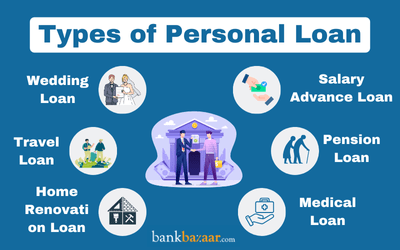
Types of Personal Loans
There are two types of personal loan schemes. They are:
- Unsecured Personal Loan: Under these types of loan schemes, you don't need to provide any security or collateral to the bank. If you meet all the eligibility criteria and have a decent credit score, then you can avail yourself of an unsecured personal loan.
- Secured Personal Loan: Under these types of personal loan schemes, you will need to provide some form of security or collateral to the bank. A business loan or a gold loan is an example of a secured loan as you may have to provide some form of property to apply for a business loan and gold if you wish to avail a gold loan.
Personal Loan Prepayment & Foreclosure Explained
There are two types of pre-payment: full pre-payment and part pre-payment.
1. Full Pre-Payment:
If you are paying off the whole outstanding loan amount before the end of the loan repayment tenure, it is known as full pre-payment.
Advantages of full Pre-Payment:
- You can avoid paying hefty interest on your loan amount.
- If you have the money to pay off your debt completely, you might as well get rid of the debt.
- You can avoid paying pre-payment interest as well, if you have taken the loan from a lender who does not charge an interest on pre-payment of the loan.
Disadvantages of Full Pre-Payment:
- If your lender charges a penalty on pre-payment of the loan amount, you might have to pay a big chunk of money for pre-paying your loan.
- Before you foreclose a loan, check the other factors related to it. Foreclosing a personal loan means that you would be paying out a huge sum of money at once. This might not always be the best option.
2. Part Pre-Payment:
If you are paying off a part of the outstanding loan amount before the end of the loan repayment tenure, it is known as part pre-payment.
Advantages of Part Pre-Payment:
- You can choose to pay off a part of your outstanding loan amount if you have some readily available money.
- Part paying your loan will reduce the outstanding principal amount which, in turn, will reduce the effective EMI amount.
- The overall interest that you pay will also reduce significantly.
Disadvantages of Part Pre-Payment:
- If you do not make the part payment soon enough, you will not be able to maximize your savings.
- If your lender charges a fee for part payment of personal loans, you might have to spend a significant amount of money for the same.
How to Repay a Personal Loan - Options & Tips
There are a number of repayment modes which are offered by lenders. Although these modes might differ from lender to lender, the most common modes of repayment can be summed up as follows:
- Electronic Clearance System (ECS): The ECS or Electronic Clearance System is one of the most commonly used repayment methods. It is an electronic mode through which funds are transferred from one bank to another.
- Post Dated Cheques (PDCs): Post Dated Cheques, as the name suggests, are cheques which are issued by you for a future date. The lender will use these cheques on the mentioned date to deposit or encash the amount mentioned on it.
- National Automated Clearing House: The National Payment Corporation of India (NPCI) offers a program called NACH to all the banks and financial institutions. The NACH allows the processing of transactions in real time. This method can be used for your loan repayments.
- Debit Mandate or Standing Instruction: You can give an instruction to your bank to pay off a particular amount of money to another bank or bank account at a regular interval. This is known as standing instruction or debit mandate. Your bank will be paying off the stipulated amount towards the repayment of your loan on a regular basis through this system.
Buy Now Pay Later
Several retailers and banks are offering the Buy Now Pay Later (BNPL)scheme, where borrowers who do not have a credit history can avail a short-term credit. The credit-worthiness of the borrower is done with the help of analytics.
Tips for Using Buy Now Pay Later
Some of the main tips that must be considered when you opt for BNPL are mentioned below:
- Know your budget.
- Read the returns policy carefully.
- Check all the penalties and fees.
- Understand the terms and payment details.
Personal Loan Top Up
A personal loan customer can avail an additional loan amount through the top-up facility over his/her existing loan. The loan amount will be subject to the terms and conditions set by the financial lender, while the interest rate may be the same as the existing loan or could be up to 1% more than the interest rate of the current loan. The tenure of the top-up personal loan will be subject to that of the existing loan.
How to Choose the Right Personal Loan
Given below are the steps which you can follow to choose the right personal loan for yourself:
- Loan Amount: Before proceeding with your decision to apply for a personal loan, it is crucial to determine the loan amount you require. Once you have established the desired loan amount, you can then calculate the equated monthly installment (EMI) obligations based on the loan amount and tenure.
Comparing loan offerings from various lenders allows you to select a personal loan option that aligns with your budget and financial goals.
- Loan Repayment Tenure: Choosing a longer tenure reduces your monthly EMI burden but entails paying more total interest over the loan duration. Conversely, opting for a shorter tenure increases your EMI but results in savings on interest payments.
Select a tenure that matches your repayment timeframe; for short-term needs, a longer tenure may not be necessary. Look for lenders offering flexible tenure options to find a suitable arrangement that suits your budget and repayment capacity.
- Rate of Interest: When acquiring a personal loan, prioritize the interest rate as the primary factor. Strive to secure the lowest interest rate feasible to reduce the overall loan expenses. Well-established banks typically provide considerably lower interest rates compared to private lenders, who might levy excessive rates.
Thoroughly research and compare interest rates offered by various banks to discover the most advantageous deal, utilizing online tools to streamline the comparison process.
- Minimum Documentation: Managing a protracted application process can be tedious, especially when urgent funds are needed. Many online lenders offer streamlined procedures with minimal documentation, leveraging technology for swift verification and decision-making.
Explore pre-approved loan offers from familiar banks or lenders for expedited approval, often requiring minimal additional information. Documentation requirements may vary based on the loan amount, with smaller loans typically involving simpler applications.
- Processing Fees: The processing fee is a one-time charge levied by the lender to cover administrative costs associated with handling your loan application. When assessing lenders, consider both their processing fees and interest rates to pinpoint the most economical choice.
Avoid prioritizing a low processing fee if it comes with a significantly higher interest rate compared to other lenders.
- Zero Collateral: Personal loans are typically unsecured, meaning there's no requirement to offer collateral as security for the loan. This lack of collateral criteria often enhances the accessibility of personal loans for eligibility, contrasting with secured loans like mortgages or auto loans.
Since no assets are pledged as collateral, there's no jeopardy of forfeiting them if the loan defaults.
How to Increase Personal Loan Approval
- Credit Clean-up: One of the main factors taken into consideration by lenders is your credit score. Getting a personal loan is easier with a high credit score. If your score is low, you must check your reports to see if there are any errors. Sometimes, simple errors could have an adverse effect on your scores, and if you find any of these, you must report them to CIBIL.
- Rebalancing your Income and Debts: Lenders ask for proof of income when you apply for personal loans in order to ascertain your debt-to-income ratio. Consider the sale of liquid assets like stocks or earning more through a part-time job to increase your annual income. Doing so will increase your debt-to-income ratio and increase your chances of getting a loan.
- Consider Co-Signers/Guarantors: If you are finding it hard to get a personal loan on your own accord, you can apply for one by adding a co-signer or guarantor. The person you choose as a guarantor must have a good credit score. Their main aim is to guarantee that you will repay the loan. However, they will also be liable to repay the loan themselves if you are unable to do so. Picking an individual with a credit score over 750 will considerably increase your chances of getting a personal loan.
- Limit Your Borrowing: It can be risky to ask for more money than you require to meet your financial targets. Make sure that you calculate how much you need and apply only for that specific amount.
- Choose the Right Lender: Every lender has their own requirements when it comes to credit scores and income. When looking for personal loans, pick a lender whose eligibility criteria you meet and apply accordingly. The problem with applying with multiple lenders is that each of them will check your credit score, and each time your full credit report is pulled out, your credit score drops, albeit marginally.
How to Access Your Personal Loan Statement Online
You can easily get in touch with your lender either through their online web portal or in person and request your personal loan statement. On most lender websites, you can just log in using your online credentials and provide your loan account number.
Once you have tracked your account, you can request a statement which is either sent to your registered email ID or provided in the form of a PDF file which can be downloaded. Similarly, you can also visit the branch office of the lender from where you have availed the loan and place a request for a statement. In addition to that, you can raise a request for your personal loan statement through phone banking as well.
Do's | Don'ts |
Research thoroughly before applying | Don’t sign without full understanding |
Read the fine print carefully | Don’t make multiple bank inquiries |
Save wisely during repayment | Don’t borrow without a valid reason |
Pay EMIs on time | Don’t rush loan comparisons |
Check your credit score | Don’t miss EMI payments |
Choose an affordable loan amount | Don’t accept poor loan terms |



FAQs on Personal Loans
1.What is a personal loan?
A personal loan is an unsecured loan you can borrow from a bank or financial institution to meet financial needs such as medical expenses, travel, or a wedding, without pledging any collateral. Because a personal loan carries no security requirement, approval depends mainly on your income, credit score, and repayment capacity. You repay a personal loan through fixed monthly EMIs over the loan tenure.
2.How does a personal loan work?
A personal loan works by disbursing an approved loan amount to your bank account after the lender verifies your application and documents. You then repay the personal loan through equated monthly instalments (EMIs) spread across the agreed tenure. The EMI amount depends on the loan amount, interest rate, and tenure you choose.
3.What determines the interest rate on a personal loan?
The interest rate on a personal loan depends on the loan amount, your credit score, and the repayment tenure you choose. A higher credit score and a strong relationship with the lender can help you secure a lower personal loan interest rate. Current personal loan interest rates from various banks are listed in the comparison table above.
4.How do I apply for a personal loan online?
You can apply for a personal loan online by comparing lenders on BankBazaar, checking your eligibility, and submitting the application along with your identity, address, and income documents on the lender's website. Most lenders review the personal loan application digitally and communicate their decision within a few days. Once approved, you sign the loan agreement electronically and the amount is disbursed to your bank account.
5.What documents are required for a personal loan application?
A personal loan application typically requires proof of identity, proof of residence, and proof of income, with salaried applicants submitting salary account bank statements and self-employed applicants submitting audited financial statements. The exact document list is detailed in the documents table above. Requirements can vary slightly from lender to lender.
6.Can NRIs apply for a personal loan?
Yes, NRIs can apply for a personal loan by submitting additional documents such as a passport copy, visa copy, and NRO or NRE bank statements alongside the standard identity and income proofs. The complete list of documents NRIs need for a personal loan is listed above. Lenders assess NRI personal loan applications using the same income and credit criteria as resident applicants.
7.What are the key advantages of taking a personal loan?
A personal loan gives you quick access to funds for emergencies or planned expenses such as medical bills, weddings, or travel, without requiring you to pledge any collateral. Since a personal loan is unsecured, your existing assets are not at risk if you are unable to repay. Fixed EMIs on a personal loan also make budgeting and repayment easier to plan.
8.How is the EMI on a personal loan calculated?
The EMI on a personal loan is calculated using the loan amount, the applicable interest rate, and the repayment tenure. You can use the BankBazaar personal loan EMI calculator to estimate your instalment before applying, and it also generates an amortisation schedule. Entering different combinations of loan amount and tenure helps you find an EMI that fits your budget.
9.What fees and charges apply to a personal loan?
A personal loan typically involves a processing fee, applicable GST, and charges for verification, duplicate statements, and defaults or prepayment, in addition to the interest rate. The exact fees and charges for a personal loan differ from lender to lender. You should check the current fee structure of your chosen lender before applying.
10.What are the different types of personal loans?
Personal loans are broadly of two types: unsecured personal loans, which require no collateral, and secured personal loans, which need you to pledge an asset such as gold or property. Most personal loans offered by banks and NBFCs in India are unsecured. Your eligibility and credit profile determine which type of personal loan you qualify for.
11.What is prepayment of a personal loan?
Prepayment of a personal loan means repaying your outstanding loan amount, either fully or partly, before the end of the agreed tenure. Full prepayment closes the personal loan entirely, while part prepayment reduces the outstanding principal and lowers your future EMI or tenure. Many lenders levy a prepayment charge on a personal loan, so it helps to check the terms before deciding.
12.What repayment methods are available for a personal loan?
You can repay a personal loan through Electronic Clearance System (ECS), post-dated cheques, the National Automated Clearing House (NACH), or a standing instruction that lets your bank pay the EMI automatically each month. The repayment method available for your personal loan depends on what your lender supports. Choosing an automated method helps you avoid missed personal loan instalments.
13.What is Buy Now Pay Later in the context of personal loans?
Buy Now Pay Later (BNPL) is a short-term credit facility offered by some retailers and banks that lets borrowers without a credit history make purchases and repay later, evaluated using analytics rather than a traditional personal loan process. It works alongside, rather than as a replacement for, a standard personal loan. Borrowers should still check the fees, penalties, and repayment terms before opting for BNPL.
14.What is a personal loan top-up?
A personal loan top-up lets an existing personal loan customer borrow an additional amount over their current outstanding loan, subject to the lender's terms and conditions. The interest rate on a top-up personal loan may match the existing loan or run slightly higher. The top-up tenure generally aligns with the tenure of the existing personal loan.
15.How do I choose the right personal loan?
Choosing the right personal loan means comparing the loan amount, repayment tenure, interest rate, processing fees, and documentation requirements across lenders before applying. A longer tenure lowers your EMI but increases total interest, while a shorter tenure does the opposite, so match the personal loan tenure to your repayment capacity. Since most personal loans are unsecured, you can also compare lenders without worrying about pledging collateral.
16.What credit score do I need for a personal loan?
Lenders generally look for a healthy credit score when assessing a personal loan application, since it reflects your repayment history and creditworthiness. A higher credit score improves your chances of approval and can help you secure a personal loan at a more competitive interest rate. If your credit score is low, reviewing your credit report for errors can help before you reapply.
17.How can I increase my chances of personal loan approval?
You can increase your chances of personal loan approval by maintaining a clean credit report, keeping your income-to-debt ratio favourable, and applying with a lender whose eligibility criteria you comfortably meet. Adding a co-signer or guarantor with a strong credit score can also strengthen a personal loan application. Applying to multiple lenders at once is best avoided, since each personal loan enquiry can affect your credit score.
18.What should I do if my personal loan application is rejected?
If your personal loan application is rejected, it is usually because of a low credit score or not meeting the lender's eligibility criteria. Reviewing your credit report, correcting any errors, and improving your credit score before reapplying can help. Meeting the eligibility criteria in full reduces the chances of your personal loan application being turned down again.
19.What can a personal loan be used for?
A personal loan can be used for a wide range of purposes, including holidays, medical bills, home renovation, a wedding, debt consolidation, or purchasing consumer goods, since lenders place no restriction on how you use the funds. This flexibility is one of the main reasons borrowers prefer a personal loan over purpose-specific loans. You are not required to disclose receipts or proof of spending to the lender.
20.How can I access my personal loan statement online?
You can access your personal loan statement online by logging into your lender's web portal with your loan account number and downloading the statement, which is usually also emailed to your registered address. Alternatively, you can request your personal loan statement by visiting the lender's branch or through phone banking. Most lenders make this facility available at any time rather than restricting it to specific hours.

Karishma VP has over a decade of experience in content writing which includes over five years specializing in personal finance. Her career in BankBazaar has given her the opportunity to write on a wide variety of financial products ranging from credit cards and home loans to insurance policies and government schemes. She believes that an understanding of personal finance is an important step to leading an independent, empowered life. This has led to her being passionate about learning more about the BFSI sector and writing about it as clearly, concisely, and accurately as possible to make it accessible to a larger audience through BankBazaar.
Personal Loans by Bank
- SBI Personal Loan
- HDFC Personal Loan
- IDFC First Personal Loan
- Kotak Personal Loan
- Axis Personal Loan
- Yes Bank Personal Loan
- IDBI Personal Loan
- Indusind Personal Loan
- Standard Chartered Personal Loan
- RBL Personal Loan
- Indian Bank Personal Loan
- Canara Bank Personal Loan
- Bank of Baroda Personal Loan
- Bank of India Personal Loan
- Central Bank of India Personal Loan
- Punjab National Bank Personal Loan
- Union Bank Personal Loan
- IOB Personal Loan
- Bank of Maharashtra Personal loan
- UCO Bank Personal Loan
- Punjab and Sind Bank Personal Loan
Personal Loan Eligibility by Banks
- SBI Personal Loan Eligibility
- HDFC Personal Loan Eligibility
- Kotak Personal Loan Eligibility
- Axis Bank Personal Loan Eligibility
- SCB Personal Loan Eligibility
- Tata Capital Personal Loan Eligibility
- IDBI Bank Personal Loan Eligibility
- Indusind Personal Loan Eligibility
- RBL Personal Loan Eligibility
- Yes Bank Personal Loan Eligibility
- Canara Bank Personal Loan Eligibility
- Bank of Baroda Personal Loan Eligibility
- PNB Personal Loan Eligibility
- IOB Personal Loan Eligibility
- Union Bank Personal Loan Eligibility
- Central Bank of India Personal Loan Eligibility
- UCO Bank Personal Loan Eligibility
- Bank of India Personal Loan Eligibility
- Bank of Maharashtra Personal Loan Eligibility
Personal Loan Interest Rates by Bank
- HDFC Personal Loan Interest Rates
- Kotak Personal Loan Interest Rates
- SBI Personal Loan Interest Rates
- Axis Bank Personal Loan Interest Rates
- SCB Personal Loan Interest rates
- Tata Capital Personal Loan Interest rates
- RBL Bank Personal Loan Interest rates
- YES Bank Personal Loan Interest rates
- Canara Bank Personal Loan Interest Rates
- Bank of Baroda Personal Loan Interest Rates
- Punjab National Bank Personal Loan Interest rates
Personal Loan EMI Calculator by Bank
- HDFC Personal Loan EMI Calculator
- AXIS Bank Personal Loan EMI Calculator
- Kotak Personal Loan EMI Calculator
- SCB Personal Loan EMI Calculator
- SBI Personal Loan EMI Calculator
- TATA Capital Personal Loan EMI Calculator
- YES Bank Personal Loan EMI Calculator
- PNB Personal Loan EMI Calculator
- Canara Bank Personal Loan EMI Calculator
Personal Loan Customer Care by Bank
- SBI Personal Loan Customer Care
- HDFC Personal Loan Customer Care
- IDFC First Personal Loan Customer Care
- Kotak Personal Loan Customer Care
- Axis Bank Personal Loan Customer Care
- TATA Capital Personal Loan Customer Care
- Shriram Finance Personal Loan Customer Care
- Indusind Personal Loan Customer Care
- Indiabulls Personal Loan Customer Care
- BOB Personal Loan Customer Care
- IIFL Bank Personal Loan Customer Care
- Yes Bank Personal Loan Customer Care
- RBL Personal Loan Customer Care
- Punjab National Personal Loan Customer Care
- Canara Personal Loan Customer Care
Personal Loan Status Track by Bank
- HDFC Bank Personal Loan Status
- IDFC First Personal Loan Status
- Yes Bank Personal Loan Status
- Tata Capital Personal Loan Status
- Axis Bank Personal Loan Status
- KOTAK Bank Personal Loan Status
- IndusInd Personal Loan Status
- SBI Bank Personal Loan Status
- PNB Bank Personal Loan Status
- Canara Bank Personal Loan Status
- Mahindra Finance Personal Loan Status
Personal Loan Articles
- Top Personal loan Finance Companies
- Personal Loan without Documents
- Personal Loan Verification Process
- Personal Loan Disbursal Process
- Personal Loan Preclosure Procedure
- Personal Loan for NRI
- Personal Loan Prepayment
- Pre Approved Personal Loan
- Personal Loan for Non Listed Companies
- Personal Loans by Private Sector Banks
- Microfinance Institutions
- Financial Inclusion Schemes in India
- Process of Bank Guarantee
- Promissory Notes
- Credit Appraisal
- Project Financing
- Statutory Liquidity Ratio
- Marginal Standing Facility
- Personal Loan Preclosure Calculator
- HDFC Bank Personal Loan Preclosure
Other Loans
- Mudra Loan
- Mortgage Loan
- MSME Loan
- Buy Now Pay Later
- Instant Loan
- NABARD
- SIDBI
- SKS Microfinance
- Agriculture Loan
- Business Start up Loan
- Marksheet Loan
- Loans For Unemployed
- Personal Loan for Low Salary
- Personal Loans by NBFCs
- Personal Loan for Govt Employees
- Personal Loan on Aadhar Card
- Personal Loan Insurance Plans
- Personal Loan Top Up
- Personal Loan for Salaried Employees
- Personal Loan for Self Employed

Disclaimer
Credit Card:
Credit Score:
Personal Loan:
Home Loan:
Fixed Deposit:


Copyright © 2026 BankBazaar.com.